
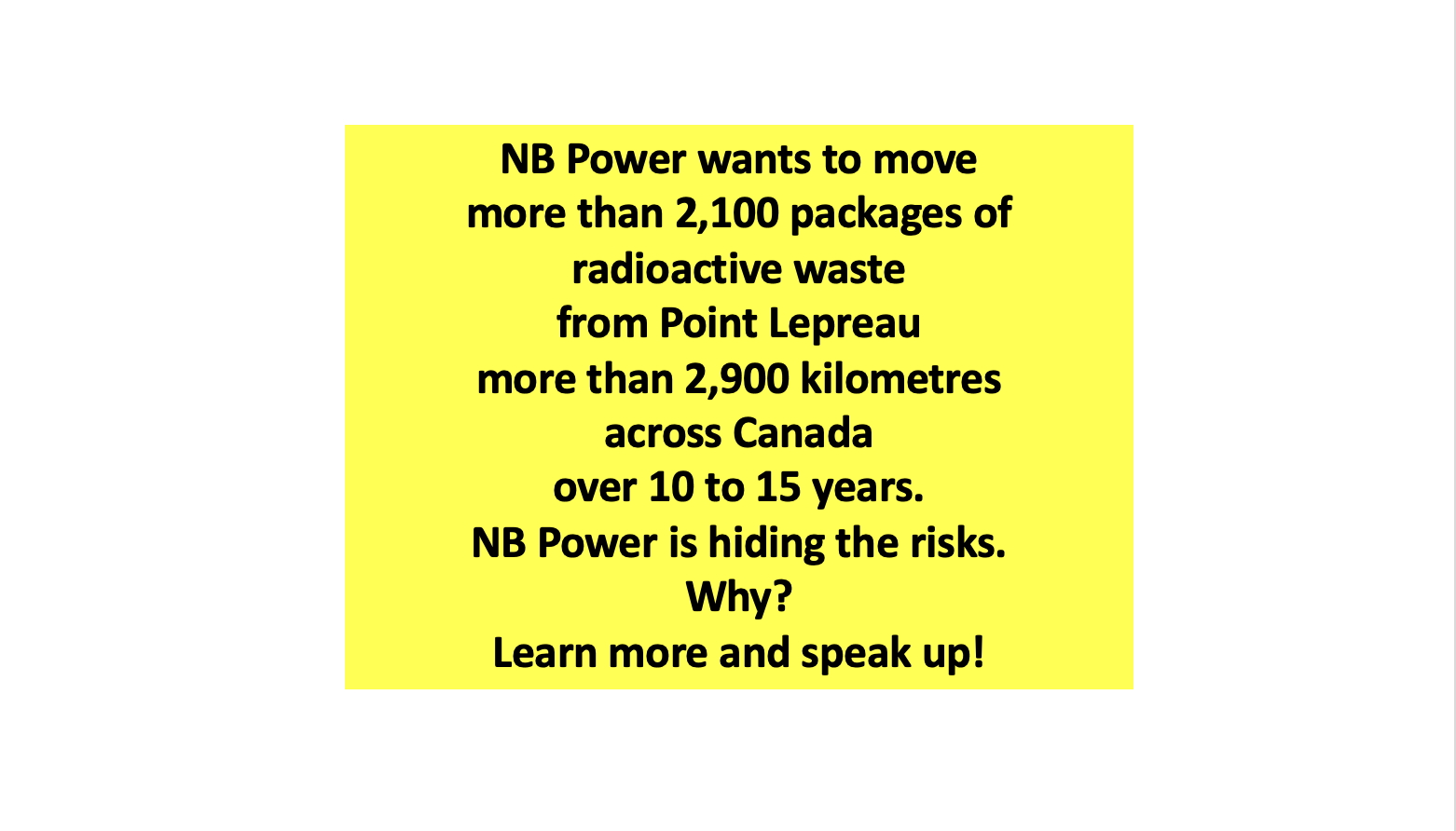
NB Power and nuclear industry partners want to build a high-level radioactive waste pit in Northwestern Ontario. But they are hiding the risks of transporting the waste more than 2,900 km from Point Lepreau through communities in New Brunswick, Quebec and Ontario, many times over many years.
Current plans envision more than 2,100 transport packages of New Brunswick’s used nuclear fuel travelling approximately 2,900 kilometres, through public roads in the province and across Canada, over a period of 10 to 15 years.
The waste is high-level radioactive waste, used nuclear fuel, among the most toxic materials on the planet. High-level nuclear waste must be kept isolated from living things for hundreds of thousands of years. The risks of moving it across Canada need to be properly evaluated, so why is that not in the “official plan?”
Everyone: we need to make sure that waste transportation is included in the official plan so the risks can be properly assessed! Please help by sending an action alert or filing a comment (scroll down).
Nuclear Waste Management Organization (NWMO, including NB Power) filed their official project plan but did NOT include the 2,900 km drive from Point Lepreau over many years. Why? To stop the public from raising concerns about it.
Here’s a new analysis published by the NB Media Co-op:
What Canada’s nuclear waste plan means for New Brunswick
Here is the media release with more information, jointly issued by CRED-NB and the Passamaquoddy Recognition Group (PRGI) and the legal non-profit LAND (Legal Advocates for Nature’s Defence) based in northern Ontario.
Here is a short video from LAND explaining the issue.
Don’t let them hide the risks to New Brunswick communities. Have your say! There’s two ways you can speak up:
1) Submit a comment on the Impact Assessment Agency website by the deadline, February 4. Your comment should include one or more of these important points:
Nuclear waste transportation routes and risks must be included in the impact assessment so that we can have a full understanding of cumulative effects and impacts on sustainability and future generations.
Indigenous rights and consent must be respected as recognized by the United Nations Declaration on the Rights of Indigenous Peoples (UNDRIP) and required under Canadian law.
Environmental justice! People have rights, including the right to be informed and have a say if we live on the route where the high-level waste will be transported on a daily basis for many years.
It takes only a few minutes to submit a comment by the deadline, February 4. The link is HERE.
2) Send an instant action alert letter to the Impact Assessment Agency, and the federal ministers in charge of the file. Do it soon! The deadline to thie IAAC is February 4. The link to the action alert is HERE.
NB Power and NWMO plan to send hundreds of trucks loaded with radioactive waste every year from the Point Lepreau nuclear plant on the Bay of Fundy to a deep geological repository (DGR) in Northwestern Ontario near Ignace – if the project is approved and built. The roads and highways involved are known for numerous accidents involving trucks.
This is their plan, so why isn’t it in their DGR plan recently filed with the Impact Assessment Agency of Canada?
They do not want us to ask questions about it.
They do not want the public or the Impact Assessment Agency to review and scrutinize the project’s cumulative impacts – including on future generations.
If enough people object to the Impact Assessment Agency, we can put the waste transportation back in the plan, so it can be properly evaluated. Please share this information with your friends, thank you!